
Start with what we can observe
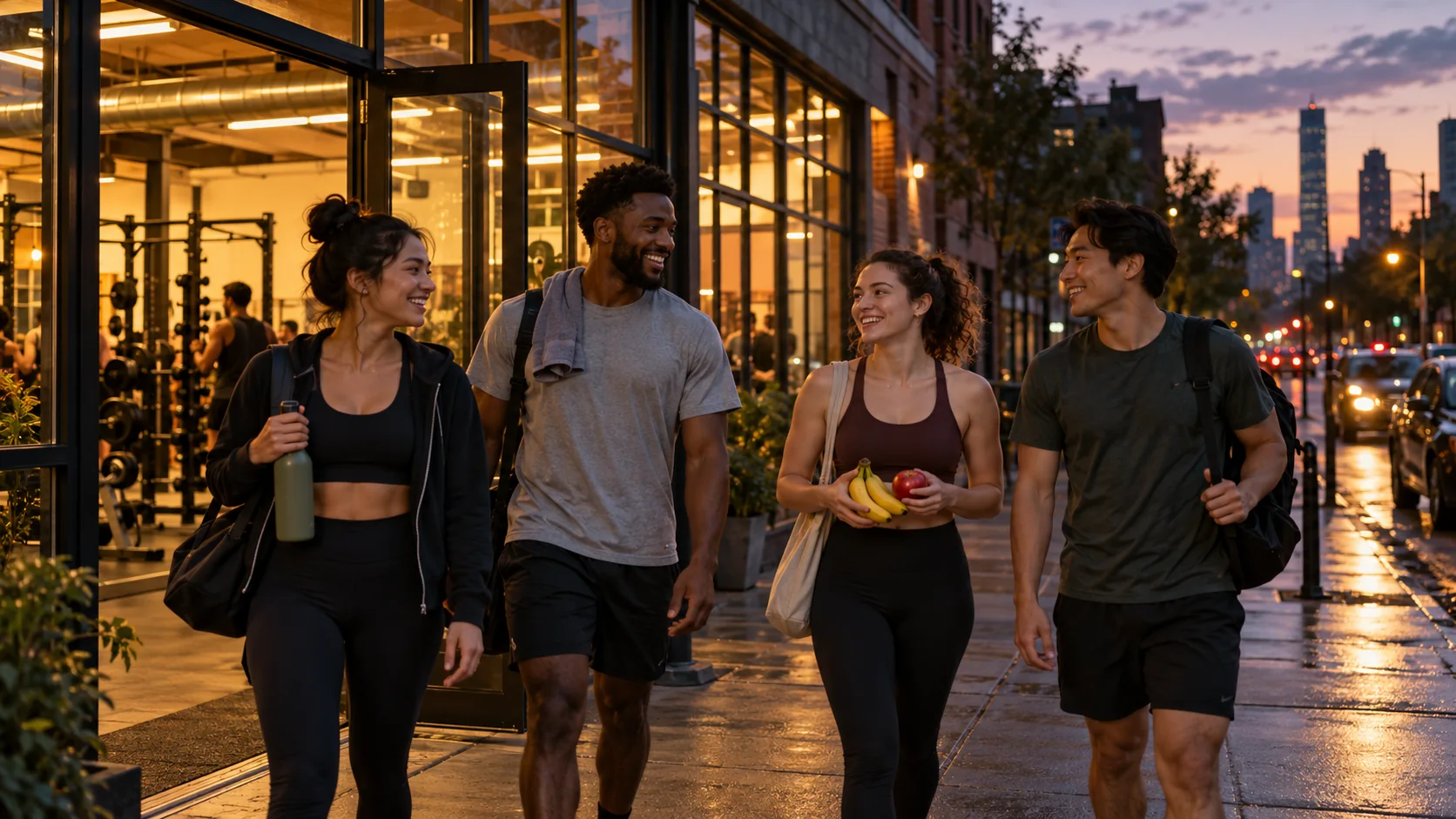
Gyms, running, food choices and wellness content are visible in young people’s conversations and feeds. A trend in a feed is not a population measure. Exercise, wellness spending, diet and “living well” are different outcomes.
In Italy, 53.9% of 18–24-year-olds played a sport in their leisure time in 2024, according to Istat. In the United States, 35.5% of adults aged 18–24 held a fitness facility membership in 2025, according to HFA. These countries and definitions differ; the figures cannot be combined.
Eating better is not universal
Italy’s 2022 HBSC survey covered adolescents aged 11, 13, 15 and 17. Only 32.7% reported eating fruit daily and 27.8% vegetables daily. This group does not represent all Gen Z adults in 2026, but it does challenge the notion that healthier eating has become universal.
A 2025 McKinsey survey of over 9,000 consumers in four countries found strong wellness interest among Gen Z and millennials. It measures selected markets and reported behavior, not the diet quality of the entire Italian population.
When did the shift begin?
The period after the pandemic made health and group activities more visible. Yet Italy’s longer sports trend predates it: Istat estimates that continuous sports participation rose from 2.6% of the population in 1959 to 30.3% in 2025. That span crosses expansions, recessions and energy shocks. One crisis cannot explain the whole change.
The CDC also documents a US fitness boom in the 1980s. It is a cultural precedent, not proof that inflation or prosperity automatically produces the same response.
Four explanations to test
Health and agency: wellness may feel like a personal investment when the future is uncertain. In McKinsey’s US sample, 40% of Gen Z respondents said they were “almost always stressed,” compared with 23% overall. This association does not show that stress causes gym membership.
Belonging: Istat’s youth research shows that sport offers social connections. Image and media: digital content and marketing make exercise and wellness products visible. Access: over 75% of children with graduate parents in Istat’s youth study played a sport, compared with 46.4% of those whose parents had at most lower-secondary education. None is a universal explanation.
Crisis or prosperity?
There is no evidence here that gyms become popular only during war, inflation or destabilization. Nor is gym use a reliable marker of a booming economy. Italy’s trend spans decades; consumers in selected markets say wellness spending remains a priority even in downturns, but stated intentions are not observed future purchases.
Our editorial hypothesis combines health culture, availability of services, community, image pressure and a response to stress. Separating age, cohort and period effects requires repeated comparable observations.
A cautious scenario to track
Through the end of 2028, if accessible activities remain available and younger people continue to use sport as a social space, participation should remain high relative to older cohorts. A sustained deterioration in affordability could widen gaps between groups without necessarily ending interest in wellness.
We will watch Istat data by age and education, ISS nutrition surveys and the cost of activities. We assign no probability without a calibrated model. Published 9 October 2026.